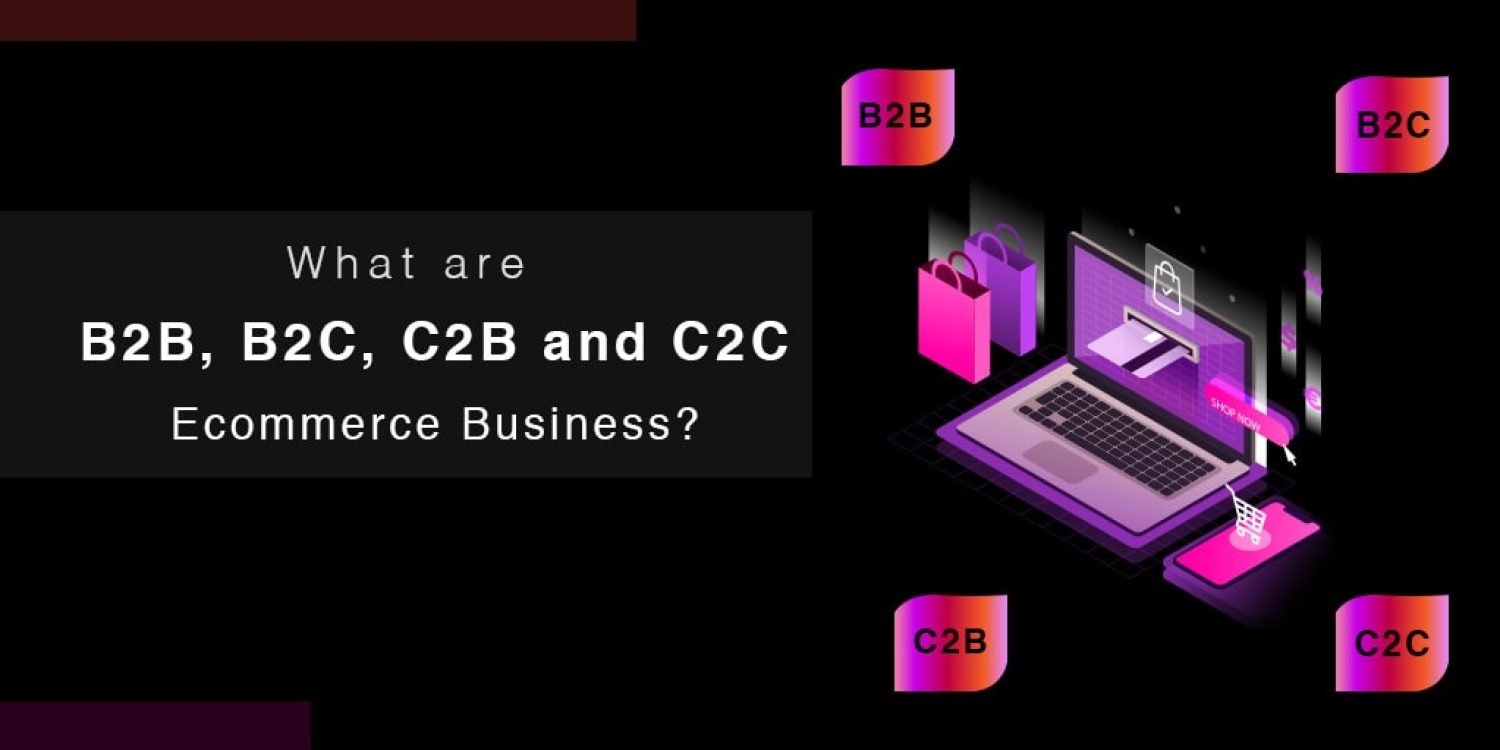
what is B2B,B2C,C2B and C2C in e-commerce:
- B2B (Business to Business)
B2C e commerce is basically when companies sell stuff right to people like you and me, not to other businesses. It seems straightforward, but theres a lot going on there.
Like when I order clothes or some electronics from an online site, thats straight up B2C in action. Or groceries, yeah, those delivery apps do the same thing. Food delivery is another one, super common now. Streaming services too, where you just pay and watch shows whenever.
The sales cycle is pretty short in this model, I mean, you see something, buy it, and its done quick. Businesses talk directly to customers, which helps with that personal touch. Pricing is usually fixed, no haggling online most times. But competition is huge, everyone is fighting for attention. They put a lot into making the experience good for the user, I guess to keep people coming back.
Amazon is a big example, and Flipkart too, especially in places like India. Online shopping websites in general fit this.
On the plus side, it reaches so many customers easily, way more than a store could. Transactions happen fast, no waiting in lines. And companies can build their brand strong through all that online presence.
But its not all easy. Marketing costs a ton, you have to advertise everywhere. Competition is intense, like I said, makes it hard to stand out. Keeping customers loyal is tricky too, they might just switch to the next best deal.
This model shows up in daily life all the time, ordering whatever online. It feels convenient, but sometimes I wonder about the downsides not getting covered here.
The advantages of B2B e-commerce include:[6]
- Convenience: While companies can sell through physical storefronts or take transactions by phone, B2B commerce often takes place online, where companies advertise their products and services, allow for demonstrations and make it easy to place bulk orders. Sellers also benefit from efficient order processing thanks to this digital transaction model.
- Higher profits: B2B companies often sell their items in wholesale quantities, allowing buyers to receive a good deal and restock less often. Larger order numbers lead to higher potential sales and additional profits for B2B sellers. At the same time, the ease of advertising to other businesses through B2B websites can help cut marketing costs and boost conversion rates.
- Huge market potential: From business software and consulting services to bulk materials and specialized machinery, B2B sellers can target a large market of companies across industries. At the same time, they have the flexibility of specializing in an area like technology to become a leader in the field.
- Improved security: Since contracts are a common part of B2B commerce, there’s some security for both buyers and sellers in that there’s less concern that one will pay and the other will deliver goods as promised. Since sales usually get tracked digitally, it’s also more secure in that B2B sellers can track and monitor their financial results.
The disadvantages of B2B e-commerce include:[6]
- More complex setup process: Getting started as a B2B retailer takes work to figure out how to get customers who stay dedicated and make large-enough orders. This often requires thorough research to advertise to potential businesses, set up a custom ordering system and adapt quickly when sales are underwhelming;
- Limits to sales: While B2B companies can sell a lot, they do miss out on potential sales to individual customers. The smaller pool of business buyers and the need to negotiate contracts can put some limits on profits, especially when the company loses key buyers to other competitors;
- Need for B2B sellers to stand out: At the same time, the B2B market has many companies competing and selling similar products and services. Sellers often need to cut prices and find special ways to grab companies’ attention to succeed in the market;
- Special ordering experience needed: B2B companies selling online need to put much effort into designing a website and ordering system that buyers find easy to use. This means presenting product and service information clearly, offering online demos or consultations and using order forms with appropriate options for quantities and any special customization needed.
- Complex payment process: B2B online payment solutions are both time-consuming and expensive for both parties. The buyer has to be credit checked, they’ll often negotiate payment terms and trade discounts and the business will manually have to create a custom invoice.[7]
2.B2B (Business to Business)
Business to business e commerce basically means when companies deal with each other, like one selling stuff to another company instead of regular people buying things. Its not the usual shopping you see online for yourself. Transactions happen between businesses, and that keeps it focused on bigger deals.
Things like this often involve really large amounts of stuff being bought at once. Companies build these long relationships over time, which makes sense because they keep working together. Pricing isn’t just set, they negotiate contracts and all that, and its usually bulk purchasing so not small orders. The decisions take longer too, more complicated with people involved from different sides.
For example, a manufacturer might sell raw materials straight to a wholesaler. Or wholesalers send goods to stores that sell to customers. Software companies do it with big enterprise solutions for other businesses. Alibaba is a huge one, they link up manufacturers and suppliers all over the world with companies that need those things. It seems like that connects everything pretty widely.
One good part is the revenue gets higher from those bulk transactions, not little sales here and there. Partnerships stay stable and last a while, which feels reliable. Demand is more predictable when you have steady clients.
But there are downsides, sales cycles drag on forever sometimes. Negotiations get really complex, and you end up depending on just a few big clients, which might not be great if something goes wrong.
In India, platforms such as India MART make it easier for small and medium businesses to find suppliers or buyers. They connect everyone, I think it helps a lot with local stuff. Not sure how widespread it is everywhere, but it seems useful for smaller companies trying to grow.
The advantages of B2C e-commerce include:[10]
- Unlimited marketplace: The marketplace is unlimited, enabling the customers to explore and shop at their convenience. We can check on the desired product from home, offices and anywhere else without any time restrictions. Products can be purchased from around the world. It represents the breaking of international barriers, giving people the opportunity to purchase products virtually;
- Lower costs of doing business: B2C has reduced several business components including employees, purchasing cost, mailing confirmations, phone calls, data entry and the requirement for opening stores with physical existence. This has reduced transaction costs for customers;
- Business administration made easier: It has made it easier to record store inventory, shipment, logs and overall business transactions compared with traditional methods of business administration. These calculations are now occurring automatically. Moreover, real-time updates can be provided, through which any issues can be flagged;
- More efficient business relationships: Building new and improved associations with the dealers and suppliers;
- Workflow automation: This process enables the shipping of products in a timely manner. Furthermore, it automatically adjusts stock levels and figures out location availability. It includes highly reliable security systems, with step by step verification, account entry and admiration mode to look after business transactions. The third-party direct sales are backed up with familiar banking and accounting features that enable businesses to reach out to vendors and perform internal business transactions accordingly.
The disadvantages of B2C e-commerce include:[10]
- Infrastructure: Even though the internet enables reaching a huge, international pool of customers, many still do not have access to the internet;
- Competition: Competition is severe. There are certain companies that have managed to maintain sizeable market shares giving them a chance to survive in the long run. New and improved products must be rolled out consistently to secure customers;
- Limited product exposure: Despite rewarding the customers with ease-of-access and a unique level of flexibility for choosing products, e-commerce has restricted product exposure for buyers over the internet. Most websites would not allow customers to go beyond the glamorous product images and their descriptions at the time of purchasing the product. It gives consumers the idea that e-commerce supports ‘limited product exposure’, which is why some products disappoint customers at the time of shipment and are sent back to companies immediately.
3.C2B (Consumer to Business)
Consumer to business, or C2B, basically means that regular people offer their products or services directly to companies instead of the other way around. Its kind of interesting how that flips the usual setup.
People create value for businesses in this model, like through freelancing or digital stuff. Pricing can be flexible, often tied to specific projects. You see it a lot with writing, designing, programming, those kinds of services. Freelancers do that, or influencers who promote brands for money. Even photographers selling stock images to companies. Platforms like Upwork and Fiverr make it easy, they are really popular for connecting everyone.
The advantages seem pretty good for individuals. They get chances to earn income on their own terms, with flexibility in how and when they work. Plus, access to global markets, which opens up more opportunities. But there are downsides too. Income can be unstable, you never know what is coming next. High competition makes it tough, and no real job security, that part feels risky.
In India, this is growing fast with all the remote work and freelancing boom. Many people there are using these C2B platforms to team up with companies around the world. It seems like its changing how folks make a living, though I am not totally sure how sustainable it is long term.
4.C2C (Consumer to Consumer)
C2C e-commerce is basically when people buy and sell stuff directly to each other online, with some platform in the middle to make it happen. I think that’s the main idea, like individuals trading things without a big store involved in ;e-commerce .
One thing that stands out is how its all peer to peer, so no middleman owning the goods or anything. Platforms like eBay just connect buyers and sellers, and they often have these trust systems where you rate each other to build reputation. That seems pretty key because without it, who knows if you’re getting scammed. e-commerce
Examples are everywhere, you know. Like selling your old books or furniture on sites such as OLX, or even auctions where people bid on used electronics. Renting out stuff you don’t use much, that’s another one. It promotes reusing things, which is good for the environment I guess, but sometimes it feels a bit messy.
The advantages make it appealing for everyday folks. Sellers can jump in easily without needing a shop, and buyers get lower prices than in retail stores. Plus, it encourages sustainability by keeping items out of landfills longer.
On the flip side, there are downsides that make you think twice. Fraud risks are real, since you’re dealing with strangers, and customer support is usually limited compared to big companies. Quality can be uncertain too, like you might get something not as described.
In daily life, its super common. Say you want to offload that old couch gathering dust, you just list it online and someone local picks it up. Or trading books you finished reading. Platforms handle the transactions, but yeah, the trust part is what keeps it going, even if its not perfect.
The advantages of C2C include:
- Availability: It is always available so consumers can shop on demand;
- Websites are updated regularly; e-commerce
- Higher profitability: Consumers selling products directly to other consumers can achieve higher profits;
- Low transaction cost: Selling via online platforms is much cheaper than the costs incurred on having physical store space;
- Direct relationship: Customers can directly contact sellers without having to go through an intermediary.
The disadvantages of C2C include:
- Payment may be less secure;
- Security issues: There could be theft due to scammers falsely impersonating well known C2C sites;
- Lack of quality control of products ;e-commerce.