
What are the 4 types of e-commerce
E-commerce means buying and selling goods and services over the internet. It’s a big part of the global economy now. Businesses and people can trade online without worrying about where they are.
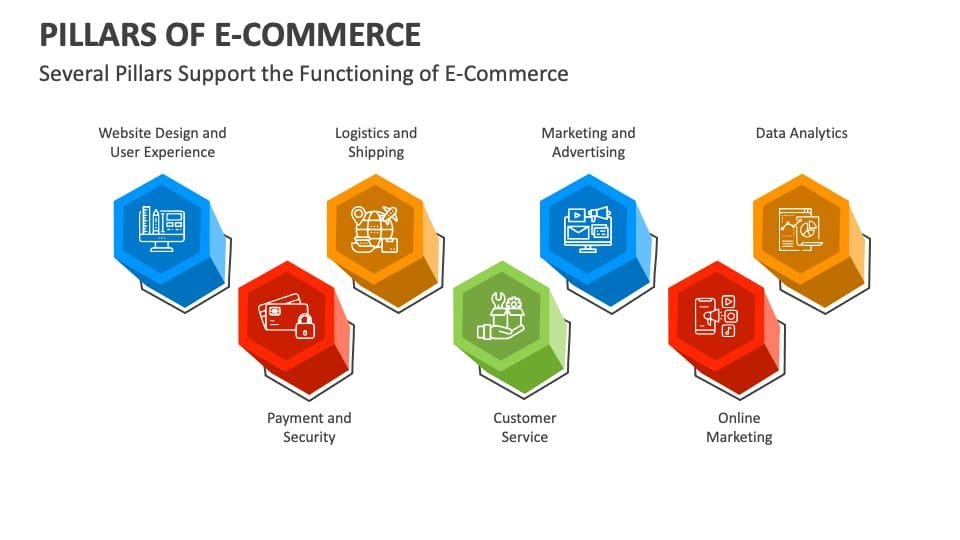
E-commerce is usually split into four types. Business-to-Consumer, or B2C. Business-to-Business, or B2B. Consumer-to-Consumer, C2C. And Consumer-to-Business, C2B. Each one works a bit differently and has its own use cases. Knowing the types helps you see how online businesses work and how digital transactions are set up. The topic is often covered in five sections. Introduction to E-commerce Types. B2C Model. B2B Model. C2C Model. C2B Model.
What are the 4 types of e-commerce
The first section gives a general overview of those categories. The split depends on who sells and who buys in a transaction. Businesses might sell straight to customers or to other businesses. Or a business might buy services from an individual. People can also sell to other people or offer skills to companies. Those interactions form the different e-commerce models. Digital platforms have made those models grow and change. E-commerce is more flexible now and easier to access. Knowing the categories helps students and professionals getting into online business.
The second section is about Business-to-Consumer, B2C. This is the most common type. Here, businesses sell products or services directly to individual customers. It’s what most people mean when they say “shopping online.” Think online retail stores and service sites where you browse, add to a cart, and pay. Amazon and Flipkart are big B2C players. B2C puts a lot of weight on user experience and marketing. Companies use nice designs and promotions to pull people in. They also try to keep customers coming back with recommendations. Lots of competition. Things move fast.
The third section covers Business-to-Business, B2B. This is when businesses sell to other businesses instead of to individuals. Often the sales are in bulk. For example, manufacturers sell raw materials to wholesalers. Or software firms sell services to organizations. Alibaba is a well-known B2B platform. Transactions tend to be larger. Sales cycles are longer. Decision making is more complex. B2B is about building business relationships, offering tailored solutions, and being reliable and efficient.
The fourth section looks at Consumer-to-Consumer, C2C. Individuals sell directly to other individuals. You see this on marketplaces and auction sites. People list items, set prices, and deal with buyers themselves. eBay and OLX are examples. C2C is common for second-hand goods, handmade stuff, and unique finds. It lets people sell without forming a formal business. Trust and security can be issues. So platforms add rating systems and buyer protection to make things safer.
The fifth section explains Consumer-to-Business, C2B. This one is less common but growing. Individuals offer products or services to businesses. Freelancers, content creators, and influencers sell design, writing, or marketing services to companies. Platforms like Upwork and Fiverr connect them. Individuals can set their own prices and work on their own terms. Businesses get access to a wider pool of talent without hiring full-time staff.
So those are the four main e-commerce types: B2C, B2B, C2C, and C2B. Each serves a different audience, from single shoppers to large organizations. Technology keeps changing things, and the models keep blending together. Understanding them gives you a clear starting point for exploring online business opportunities and strategies.
Business-to-consumer(B2C):
Business-to-Consumer or B2C e-commerce is the common online model where companies sell products or services straight to people through websites and apps. This is the typical online shopping most of us know. You browse, compare prices, and buy. It has grown fast as the internet, smartphones, and digital payments spread. Makes it easy for businesses to reach customers around the world. The idea can be broken into five parts. First, an intro to B2C. Second, the business model and how it works. Third, key features and strategies. Fourth, tools and technologies. Fifth, advantages, challenges, and future scope.
The first part explains the basics. Businesses are the sellers and individuals are the buyers. The goal is to get products or services to end users in a simple way. Shops are open all the time online. People can browse lots of products and buy without going to a store. Amazon and Flipkart are big examples, with millions of items across categories. User experience and customer satisfaction matter a lot here. Things get very competitive.
The second part covers how B2C works day to day. Usually businesses list products with descriptions, images, and prices. Customers visit the site, search, and add things to a cart. When ready they go to checkout, give shipping details, and pay with credit cards, digital wallets, or cash on delivery. After an order is placed, the business processes it, ships it, and delivers it. Customer support, return rules, and feedback systems are part of the flow too. The aim is a smooth shopping experience.
The third part looks at the features and the tactics that make it work. A website that is easy to use keeps people from getting frustrated. Good photos and customer reviews help shoppers decide. Marketing often uses discounts and personalized suggestions to bring people back. SEO and social media get you seen. Fast pages, secure payments, and a site that works on phones matter for the user experience. These things together boost engagement and conversions.
The fourth part is the tech side. Platforms like Shopify and Woo-Commerce give the basic store setup. They handle product management, payment links, and order tracking. Analytics show what customers do and where to improve. Automation handles email, inventory, and support chores. All these tools help businesses run smoothly and scale.
The fifth part talks about upsides and problems, plus what’s next. A big upside is you can shop anytime from anywhere. Businesses can reach people worldwide and avoid some costs of physical shops. But competition is fierce. Security and keeping customer trust are ongoing worries. Logistics and delivery can get complicated. Ahead, AI, more personalization, and mobile commerce are likely to change how people shop. Companies that adapt will do better.
So B2C e-commerce is a fast-growing way for businesses to connect with customers online. It gives buyers lots of options and gives sellers a way to grow. Focus on user experience, smart strategies, and modern tech, and it stays a major part of the global economy and the future of shopping.
Business-to-business(B2B):
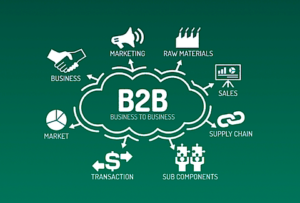
Business-to-Business (B2B) e-commerce is when businesses trade with other businesses online instead of selling to individual consumers. Companies sell products, services, or digital solutions to other companies. Often the orders are large or part of ongoing contracts. It helps supply chains, manufacturing, and service industries. Unlike Business-to-Consumer (B2C), which targets individual buyers, B2B is about organizational needs, efficiency and long-term deals. You can look at it in five parts. Introduction, how the model works, key features and strategies, the tech that supports it, and then the benefits, problems and what’s next.
First, the introduction. One business sells goods or services to another. Could be raw materials, wholesale items, software or professional services. A manufacturer might sell parts to a retailer. A software firm might provide enterprise tools to organizations. Alibaba and IndiaMART are common examples that connect buyers and sellers. The focus is on speed and reliability and making steady partnerships rather than a quick one-off sale. Used a lot in manufacturing, logistics, healthcare and technology.
Second, the business model and workflow. Usually, a company lists products on a platform or its site. Other businesses search, compare and ask for quotes. Prices aren’t always fixed like in B2C. There negotiation, bulk discounts and custom deals. Once terms are set, orders go in and payment moves through secure systems. Delivery needs careful coordination because orders can be big. Invoicing, contract handling and after-sales support are part of the flow. It’s a fairly structured process so transactions don’t get messy.
Third, key features and strategies. Bulk buying is common — companies ordering large quantities at lower unit prices. Customization too, where offerings are tweaked to fit a buyer’s needs. Managing relationships matters a lot. Firms try to keep reliable suppliers and repeat clients. B2B sites usually have detailed catalogs, specs and filters to help buyers choose. Marketing leans on trust and expertise instead of emotional appeals. Basically, the aim is professional, efficient selling.
Fourth, the tools and technologies. Systems are built to handle complex orders, big inventories and multiple users. Enterprise resource planning (ERP) and customer relationship management (CRM) tools are used to run operations and track customers. E-commerce platforms offer bulk order handling, pricing rules and secure payment gateways. Analytics show how things are performing and help with choices. Automation speeds up order processing, inventory updates and messaging. These tech pieces keep B2B operations moving.
Fifth, advantages, challenges and future scope. A big benefit is handling large transactions, which can boost revenue and growth. Automation cuts manual work and speeds things up. But it’s not all easy. Decision-making can be complex, sales cycles are longer, and trust matters. Security and data handling are also concerns. Looking ahead, digital tech, AI and more automation should make things faster and more tailored. Companies that use those tools will likely stay ahead.
Overall, B2B e-commerce is a core part of the digital economy. It connects companies, supports big transactions and favors long-term, customized relationships. With the right tools and strategies, businesses can run B2B operations more smoothly and grow. As digital tech evolves, B2B trade will keep shaping global business.
Consumer-to-consumer(C2C):

Consumer-to-Consumer e-commerce, or C2C, is where people sell things to other people online. Not companies selling. The platform mostly links buyers and sellers. It got big with the internet and mobile apps. Now anyone can trade stuff without running a formal business. It helps reuse items and makes prices lower and access easier. A big part of the modern digital market. You can break the idea into five parts: Introduction to C2C E-commerce, Business Model and Workflow, Key Features and Strategies, Tools and Platforms, and Advantages, Challenges, and Future Scope.
Introduction to C2C E-commerce explains the basics. Individuals act as sellers and buyers. A marketplace where goods and services pass directly between people. Often used for second-hand items, handmade work, collectibles, and some services. Sites like eBay and OLX let users list items, talk to buyers, and finish sales. Platforms give listings and search filters with messaging to help along. People can join online trade without big upfront costs.
Business Model and Workflow look at how it runs. First a user makes an account and lists an item. They put in a description, a price, and photos. Buyers browse, compare, and then message the seller for details or to haggle. Sometimes the platform handles payments. Other times buyers and sellers sort payment and delivery themselves. After the sale the product is sent and both sides may leave a review or a rating. Simple process. But it depends a lot on trust and clear communication.
Key Features and Strategies cover what stands out. Direct contact between buyer and seller is a big one. Negotiation and personal messages are common. Lots of different items show up. People sell almost anything, from used stuff to small handmade products. Prices are flexible. Both sides can agree on what seems fair. Ratings, reviews, and verification help build trust. Platforms also use search and recommendations to show what a user might want. بسهولة (easily). This part is all about flexibility and getting users involved.
Tools and Platforms talk tech. Marketplaces and mobile apps give the basic structure for people to meet and trade. They offer listings and messaging, plus payments and profiles. Analytics and recommendation systems make the experience smoother by showing items that fit a buyer’s tastes. Security tools like ID checks and dispute processes try to keep things safe. The whole model depends on how reliable and easy to use the platforms are.
Advantages, Challenges, and Future Scope look at pros and cons. Anyone can sell without forming a business. It encourages reuse of items and helps buyers find lower prices and more options. But there are downsides too. Trust problems, uneven quality, and the risk of scams. Platforms need solid security and dispute handling. Going forward tech should make things better. Mobile apps and AI recommendations will keep pushing growth and make the experience more personal and secure.
C2C e-commerce is flexible and open. It lets people buy and sell directly on online platforms. You can save money, clear out stuff, or find something unique. There are challenges, but the model keeps growing. As tech improves it will get easier and safer, and the digital marketplace will keep expanding.
Consumer-to-business(C2B):
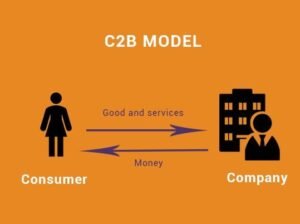
Consumer-to-Business (C2B) e-commerce is where regular people sell things or services to companies instead of companies selling to consumers. The roles are flipped. Individuals act like sellers and businesses act like buyers. It has grown a lot as the digital economy expanded, with freelancing sites, content creators, and influencer marketing driving interest. People can make money from their skills and ideas. Companies get access to new talent and fresh ideas. The idea can be broken into five parts: an intro to C2B e-commerce, how the business model and workflow work, key features and strategies, the tools and platforms used, and the advantages, challenges, plus where it might go next.
The first part, the intro, just explains the basic setup. Individuals offer services, content, or products to businesses. Think freelance work. Graphic design and writing. Or coding and photography. Even social media promotion. Companies pay for these contributions. Sometimes it is a one-off payment. Other times it turns into ongoing contracts. Platforms like Upwork and Fiverr are common places where people list skills and find business clients. It has made it easier to work on your own and reach clients around the world.
The second part looks at the business model and the workflow. Usually, a person makes a profile on a platform and lists what they do. These listings are often called gigs or proposals. Businesses either browse profiles or post jobs and wait for responses. Then the individual applies or sends an offer. Once both sides agree, the work is done and delivered in a set time. Payment often goes through the platform so both sides feel safer. After the job, people leave feedback and ratings. That helps build trust. The whole process is flexible and lets individuals and companies work together without too much friction.
The third part covers key features and common strategies. Flexibility is a big one. People set prices, pick projects, and work the hours that suit them. Services are often tailored to what a business needs. Reputation systems with ratings and reviews matter a lot. They influence whether a business hires someone again. Companies typically pick people for quality, reliability, and creative thinking. How do individuals market themselves? A solid portfolio helps. Clear communication matters. And showing good work consistently makes a difference. Success depends on skill but also on how professional someone is.
The fourth part talks about tools and platforms. Online marketplaces give the basic structure for C2B to work. They have job listings and messaging and secure payment options. Some platforms also offer ways to handle disputes. Outside of marketplaces, people use personal websites or social media to show their work and find clients. Communication tools, project management apps, and file sharing keep a project moving. Analytics can track how well someone is doing and where to improve. Using the right mix of tools makes it easier to win and finish jobs.
The fifth part looks at benefits, drawbacks, and the future. One big benefit is that people can earn money independently. They are not stuck in a single traditional job. Businesses can tap a global pool of talent and often cut costs compared to hiring a full-time person. But there are downsides. Competition is stiff. Income can be unstable. Keeping a good reputation is essential and takes work. Trust and clear communication are needed for deals to go well. Looking ahead, remote work, online platforms, and AI tools are likely to create more chances for C2B. Personal branding and niching down will matter more as the market gets crowded.
Overall, C2B e-commerce is a changing and growing way for people to sell skills and work directly to businesses. It opens up flexible options and a worldwide market. With digital platforms and ongoing skill improvement, individuals can build steady careers in this space. As the digital economy keeps expanding, C2B will keep shaping how work and online business look.