What Are the 12 Most Common Types of Websites?
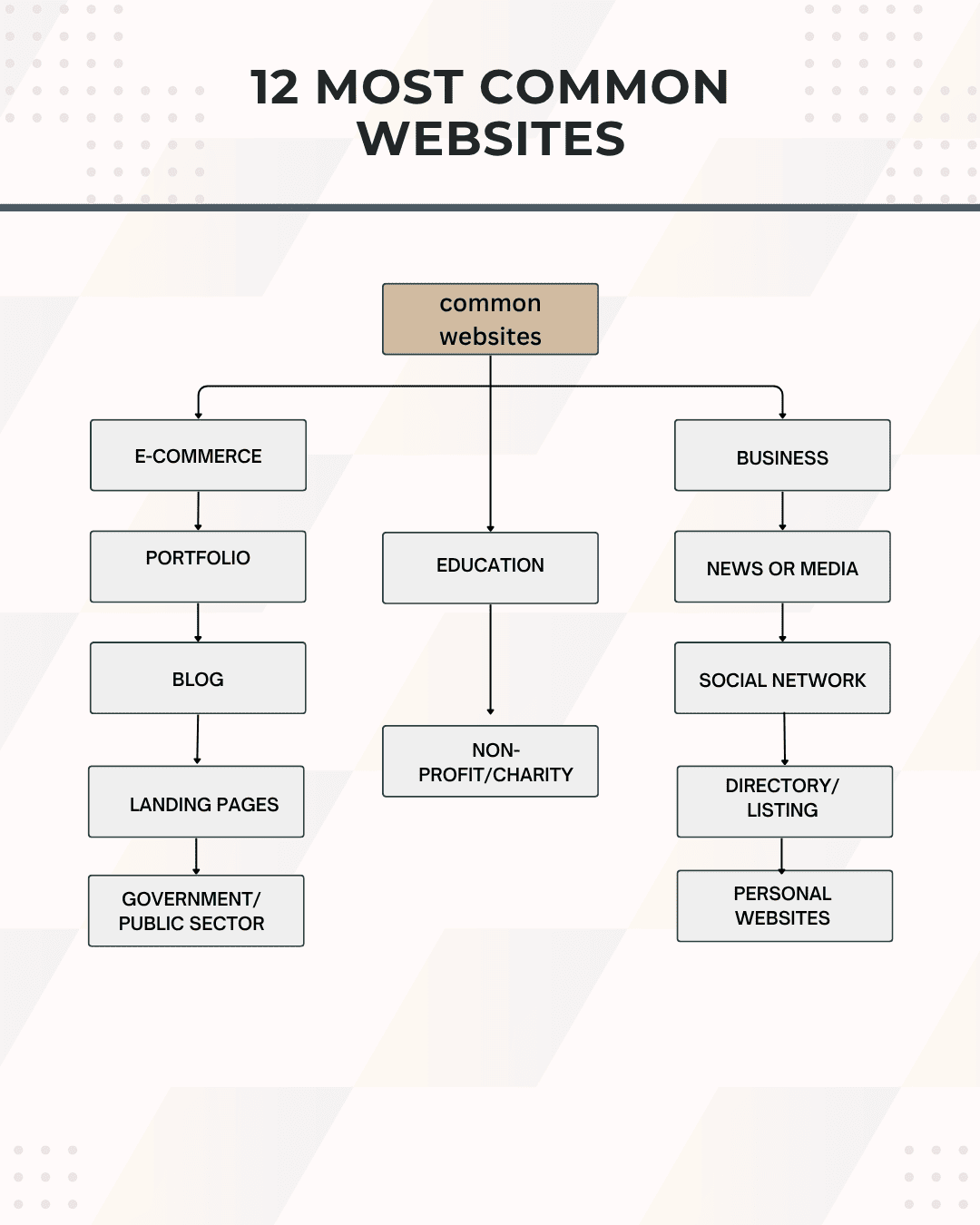
Before you start your next project, it is vital to understand what are the 12 most common types of websites so you can choose the right structure for your goals. The internet is filled with a wide variety of websites, each designed for a distinct purpose and audience.
Knowing the most common types helps you understand what your own website might need — whether you’re a business owner, freelancer, or just someone planning a personal site. These categories aren’t always super strict (there’s a lot of overlap), but they give you a clear starting point for deciding on layout, features, and overall feel. Before starting a project, knowing what does a web design company do to customize these 12 site types is essential.
A Detailed Guide on What Are the 12 Most Common Types of Websites?
E-commerce Websites
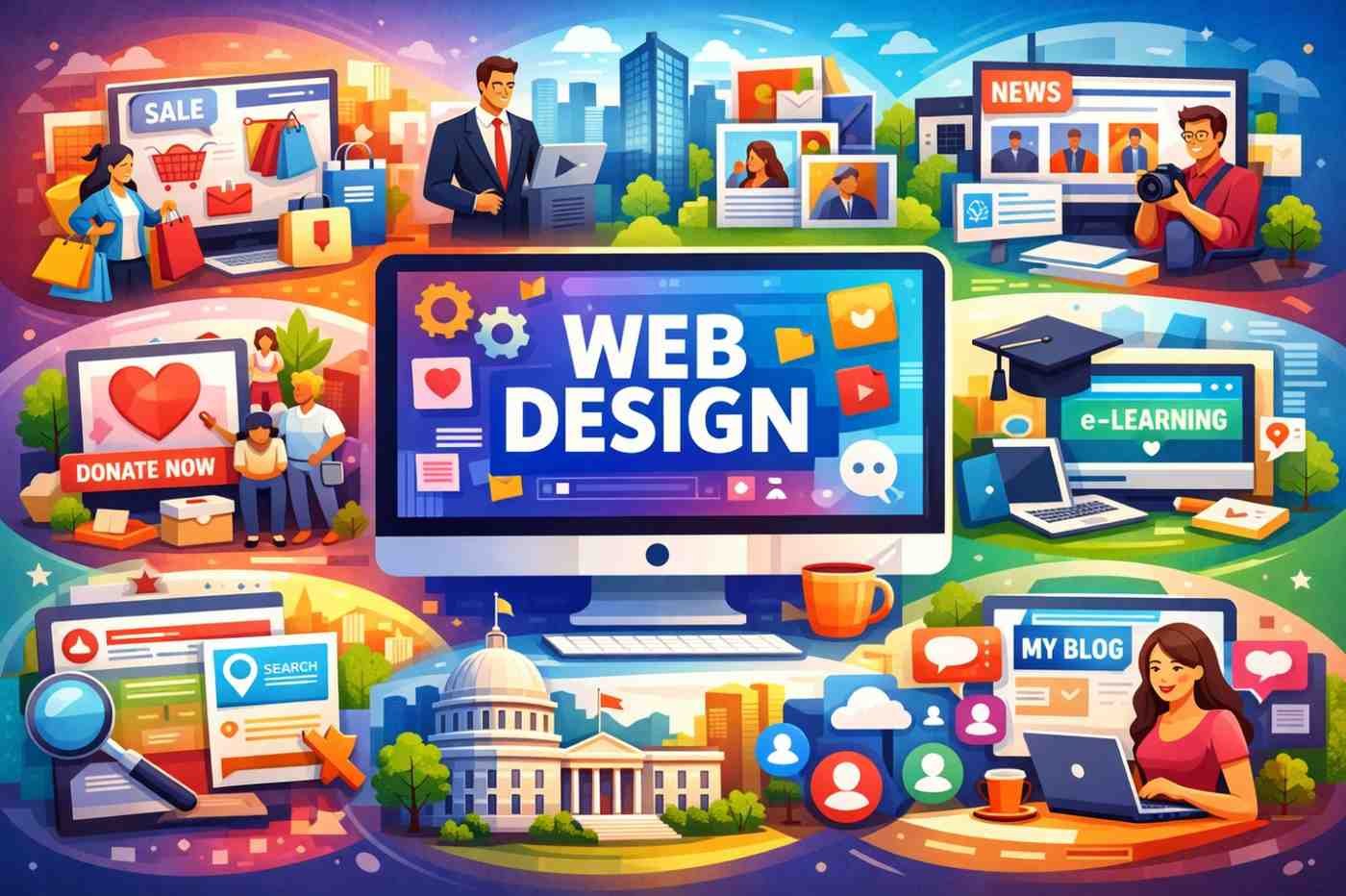
These are online stores where people buy products or services directly. Think Amazon, Etsy, or any Shopify store. They usually have product pages, shopping carts, secure payment options, and order tracking. The big focus here is making the buying process smooth and trustworthy — because even one small hassle can make someone abandon their cart.
Business / Corporate Websites
This is the classic “official website” for a company. It tells visitors who you are, what you do, your story, and how to get in touch. These sites are all about building trust and looking professional. They’re not really for selling on the spot, but more for making a solid first impression and supporting sales or marketing efforts.
Portfolio Websites
Creative professionals — designers, photographers, illustrators, writers — use these to showcase their best work. The design is usually very visual and clean so the projects can shine. A good portfolio site often includes case studies, galleries, and a short bio. It’s one of the most important tools for landing new clients or jobs. Photographers and designers often ask what are the 12 most common types of websites for displaying work; the answer is almost always a high-quality portfolio site.
Blog Websites
Blogs are regularly updated with articles, stories, opinions, or advice. They can be personal, professional, or even used to promote a business. Successful blogs build a loyal audience and can earn money through ads, sponsorships, or affiliate links. The key is consistent, useful content and good SEO.
News or Media Websites
These are the sites you visit for the latest headlines, articles, videos, and reports (BBC, The Guardian, CNN, etc.). They handle a huge amount of fresh content every day, so they need fast loading speeds, easy navigation, and strong search features so readers can quickly find what they’re looking for.
Educational / E-learning Websites
These platforms offer courses, tutorials, lessons, and learning materials. Coursera, Khan Academy, and Udemy are perfect examples. They usually include video players, quizzes, progress tracking, and certificates. Accessibility and ease of use are especially important because students come from all backgrounds and skill levels.
Social Network / Community Websites
Facebook, LinkedIn, Reddit, and similar platforms fall under this category. These sites enable users to create profiles, connect with others, share content, and participate in discussions. They’re technically quite complex and need strong privacy controls and moderation tools, but the design still has to feel friendly and easy to use.
Non-Profit / Charity Websites
These websites represent causes — environmental, social, humanitarian, etc. The goal is to share the mission, show real impact, attract volunteers, and encourage donations. They tend to use emotional storytelling, clear calls-to-action, and transparent information to build trust with donors.
Government / Public Sector Websites
These are official sites run by local, state, or national governments. They provide information and services like form submissions, permit applications, tax filing, or appointment booking. They must be highly accessible, secure, and written in simple language so every citizen can use them easily.
Landing Pages
A landing page is usually a single-page website built for one specific goal — collecting email addresses, promoting a new product, or getting event registrations. They’re very focused, with almost no navigation so visitors stay on track and take the desired action. Marketers test these pages constantly to improve results.
Directory or Listing Websites
These sites collect and organize information in one place — think Yelp, TripAdvisor, or Yellow Pages. Users can search, filter, and read reviews to make better decisions. The design needs to handle lots of data while staying simple and helpful.
Personal Websites
These are created by individuals to share their story, interests, hobbies, or professional work. Some are simple digital résumés or business cards, while others are more like mini blogs or creative showcases. They give you full creative freedom and are a great way to build your personal brand online.
As you can see from these 12 categories, the scope of what does a web design company do is incredibly broad and customizable.
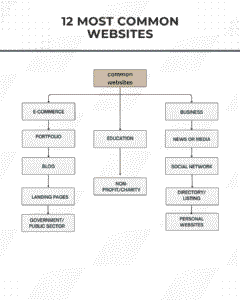
A guide to what are the 12 most common types of websites for businesses and creators.