
What Are the 7 Cs of Web Design? A Complete Beginner’s Guide
If you’ve ever wondered what are the 7 C’s of web design, then you’re already on the right path to building a successful website. Creating a website is not just about attractive design — it’s about delivering a smooth, engaging, and meaningful experience for users. Many people ask, What are the 7 Cs of web design, and the answer lies in a mix of psychology and technical layout. That’s exactly what the 7 C’s of web design help you achieve. The concept of what are the 7 C’s of web design provides a structured framework that designers and businesses use to build websites that are both visually appealing and highly functional.
The Ultimate Guide to What Are the ‘7 Cs’ of Web Design? A Complete Beginner’s Guide
Understanding what are the 7 C’s of web design which helps you:
- Improve user experience
- Build trust with visitors
- Increase engagement
- Boost conversions
- Create a well-structured website
Instead of guessing what works, this framework gives you a clear direction.
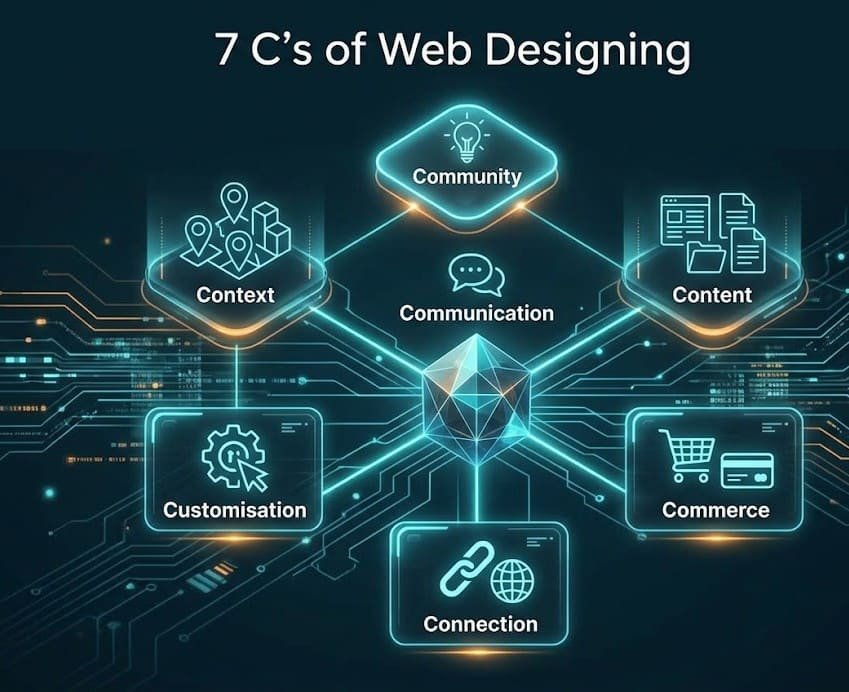
The 7 Cs of web design is a popular and practical framework that helps designers, developers, and business owners build websites that are not only beautiful but also truly effective and user-friendly. It was created with e-commerce and digital marketingin mind, but today it’s used for all kinds of websites. Think of the 7 Cs as a complete checklist that looks at every important part of a website—from how it looks to how it works and connects with people. When you follow this framework, you end up with a site that feels complete, professional, and built to deliver real results.
Core Web Design Principles: A Breakdown of the 7 Cs:
Context:
This is all about the overall look, feel, and atmosphere of your website. It encompasses colors, fonts, images, layout, and navigation — essentially, the entire visual and structural experience. Good context makes sure the website matches your brand identity and appeals directly to your target audience. When the context is right, visitors get a strong first impression and feel encouraged to stay and explore instead of bouncing away.
Content:
Content is everything your visitors actually see and read—text, images, videos, infographics, blog posts, product descriptions, and downloadable files. It has to be high-quality, relevant, useful, and regularly updated. The best content speaks clearly to your audience in a tone and style they understand and enjoy. Strong content builds trust, keeps people engaged, and helps them find exactly what they’re looking for.
Community:
This C is about creating a sense of belonging and interaction on your website. It includes features like comment sections, user reviews, forums, live chat, social media integration, and anything else that lets people connect with each other and with your brand. Community features turn one-time visitors into loyal fans and brand advocates. For many websites — especially e-commerce and social platforms — this is what keeps users coming back again and again. Building a community is a great example of what are the 7 Cs of web design in action to create brand loyalty.
Customization:
Customization (sometimes called personalization) means making the website feel tailor-made for each visitor. This could be recommended products based on past browsing, saved preferences, personalized dashboards, or content that changes according to a user’s behavior. When done well, customization makes the experience feel relevant and thoughtful, which greatly improves satisfaction and increases the chances that people will buy, sign up, or return.
Communication:
This is how your website talks to its visitors and customers. It covers contact forms, chatbots, email newsletters, push notifications, customer support tools, and any other way you share information. Clear, timely, and helpful communication builds trust and keeps users informed about offers, updates, or support issues. Websites that communicate well usually see higher customer satisfaction and loyalty.
Connection:
Connection refers to how well your website links up with other platforms and services. This includes social media links, partnerships with other sites, API integrations, affiliate programs, and third-party tools. A website that has strong connections feels part of a bigger digital ecosystem instead of standing alone. These links help you reach more people, provide extra value, and make the overall experience smoother for users. When integrating third-party APIs and social feeds, what does a web design company do is ensure your site stays connected to the wider digital world.
Commerce:
Commerce is all about the features that make buying, selling, or any kind of transaction easy and secure. For online stores, this means product catalogues, shopping carts, payment gateways, order tracking, and shipping options. But even non-e-commerce sites use “commerce” elements — like lead forms, subscription sign-ups, or donation buttons. The goal is to create a safe, simple, and enjoyable process that gives customers confidence and encourages them to complete the action. Optimizing the checkout flow is a key part of what does a web design company do to ensure high conversion rates. When a web design company integrates secure payments, they are fulfilling the commerce aspect of what are the 7 Cs of web design.
One of the best things about the 7 Cs is that they are all connected — they work together rather than in isolation. For example, great content supports better communication, and strong commerce features become even more powerful when combined with customization. By looking at your website through the lens of all seven Cs, you can spot any missing pieces and make balanced improvements.
Conclusion:
In real projects, designers and teams often use the 7 Cs as a practical checklist during planning, review, and testing stages. It keeps everyone focused on the big picture instead of just making things look pretty. When a website nails all seven Cs, it doesn’t just look good — it performs well, engages users, and helps the business achieve its goals. Now that you understand what are the 7 Cs of web design, you can audit your own site for better performance.
FAQ:
1. Which of the 7 Cs is the most important?
None of them work effectively in isolation. However, context and content are often considered the foundation. Without the right visual “context” to build trust and high-quality “content” to provide value, visitors are unlikely to engage with the other elements like commerce or community.
2. How does “customization” differ from a standard responsive design?
While responsive design ensures a site looks good on all devices, customization (Personalization) goes deeper. It involves tailoring the actual content or experience to the individual user—such as showing “Recently Viewed” products or personalized dashboards based on their specific behavior.
3. Can a non-e-commerce site still use the “Commerce” principle?
Yes. In the 7 Cs framework, commerce isn’t just about selling physical products. It refers to any transaction of value. For a service-based business or a non-profit, this includes lead generation forms, newsletter sign-ups, or donation buttons.
4. How does “Community” benefit a small business website?
Community features like user reviews, testimonials, or integrated social media feeds provide “social proof.” When new visitors see others interacting positively with your brand, it builds the credibility needed to turn a casual browser into a customer.
5. What is the role of a web design company in managing “Connection”?
A web design company ensures that your website isn’t a “digital island.” They handle the technical side of Connection by integrating third-party APIs, syncing your site with CRM systems (like HubSpot), and ensuring social media shares and affiliate links function seamlessly.
6. Does following the 7 Cs help with SEO?
Absolutely. Many of the 7 Cs directly overlap with Google’s ranking factors. For example, high-quality content and clear context improve “dwell time,” while strong communication (like fast-loading chatbots) and commerce (secure SSL payments) signal to search engines that your site is safe and user-friendly.
7. How often should I audit my site using the 7 Cs?
Web standards and user expectations change quickly. It is best practice to perform a “7 Cs Audit” at least once a year or whenever you notice a dip in your conversion rates or user engagement.
Contact Information
If you find that your current website is missing a few of these critical “7Cs,” S2S Web Technology can help. We specialize in creating balanced, high-performing digital marketing and design strategies tailored to your specific goals.
-
📍 Visit Us: 77, C2, St. Pauls Complex, Pudukkottai Road, Tiruchirappalli, Tamil Nadu 620001
-
📞 Call Us: +91 766 7741 236 | +91 908 0390 025
-
✉️ Email: info@s2scomputer.com