How to design a website for e-commerce?
Your website was designed to be seen. But whether you want to create a website for free to sell products, showcase a portfolio or launch a blog, good web design alone won't cut it. While offline marketing efforts are also there to get eyes on your brand, search engine optimization (SEO) is one of the best (and most cost efficient) ways to bring in new traffic to your site.
How to boost your web design with SEO :
- Create quality user content
- Social proof your website
- Make sure your website’s text is readable
- Use headers to create hierarchy within content
- Fill out your website’s metadata
- Practice internal linking
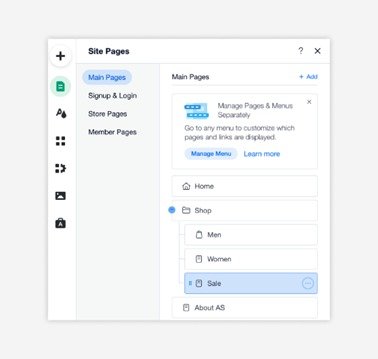
- Layout a seamless information architecture
- Make sure your site’s pages are indexed
- Don’t forget to make your site mobile-friendly
- Optimize your website for performance
- Follow accessibility guidelines
01. Create quality user content
Search engines are always on the hunt for quality content that satisfies their users. Back in the day, optimizing content meant using techniques like “keyword stuffing”—the likes of which don’t work today.
02. Social-proof your website
An estimated 88% of consumers say they trust user reviews as much as personal recommendations. Adding social proof to your website means using the power of digital influence to generate positive sentiment around your brand, its services and products.
03. Make sure your website’s text is readable
Readability is the practice of ensuring that the text employed on a site is legible for all sorts of users—with or without visual impairments. While choosing the best fonts for your website is a design-oriented part of the creation process, it not only affects your
04. Use headers to create hierarchy within content
When search engines’ bots scan your web pages, much of how they comprehend your content depends on having a logical structure in place. Headers are a web design element that breaks down and organizes a webpage in a way that benefits both UX and SEO.
05. Fill out your website’s metadata
Metadata refers to descriptions added to each of your site’s pages that summarize the information included on it. While they aren’t visible on the page, they’re included in the code to help Google understand the content and portray that to its users.
06. Practice internal linking:
Internal linking is the practice of connecting pages of your website to and from one another. Alongside your website’s navigation menu, internal linking is an integral part of your site’s structure. From a design perspective, they’re a critical part of the user experience, giving users a clear path for finding what they’re looking for it.
07. Layout a seamless information architecture
One of the most critical places where user behaviors and SEO are always “on the same page” is in your site’s information architecture. Information architecture is the art of organizing, labeling and structuring your website’s content to create a logical pattern that users can follow.
08. Make sure your site’s pages are indexed :
Getting your site indexed by Google is one of the most critical aspects of SEO and web design because it's what makes your website discoverable to users. When this happens, search engines crawl your site and analyze the content, adding it to its giant database of web pages. Ultimately, this can help drive traffic improve your site's
09. Don’t forget to make your site mobile-friendly
In 2022, mobile devices generated about 58.99% of global website traffic—so if your site’s design isn’t optimized for smaller screens, you’ll miss out on connecting with a significant amount of potential visitors. Prioritizing the needs of these mobile users as you design a website results in a better browsing experience, and a better chance of ranking.
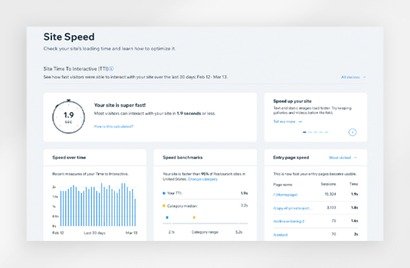
10. Optimize your website for performance
Website performance measures how fast a website's pages load and display in a user's browser on any type of device, impacting overall interactivity and usability. Search engines like Google always prioritize a good user experience, and a slow or unresponsive site can negatively impact that—risking lost traffic, low engagement and
11. Follow web accessibility guidelines :
You might be surprised to find out that, due to disabilities, 1 billion people around the globe—that's 15% of the world’s population—can’t access most of the internet’s information or services. Web accessibility is the practice of ensuring that everyone, including individuals with disabilities or impairments can use your site without barriers.
Conclusion:
Understanding the 7 types of e-commerce is like having a map in a digital jungle. Each model serves a unique purpose, audience, and opportunity. Whether you’re starting small or scaling big, choosing the right e-commerce type can define your success. Learn the models, test wisely, and grow confidently in the world of e-commerce.
FAQs:
What are the 7 major steps to designing a websites?
For me, steps to design a website requires 7 steps:
- Goal identification.
- Scope definition.
- Sitemap and wireframe creation.
- Content creation.
- Visual elements.
- Testing.
- Launch.
What is the 3-3-3 rule in marketing?
The 3-3-3 rule in marketing is a strategic framework that encourages businesses to focus on three core messages, deliver them through three primary channels or campaign phases, and reinforce them consistently across key touchpoints.
What are the 7 types of e-commerce?
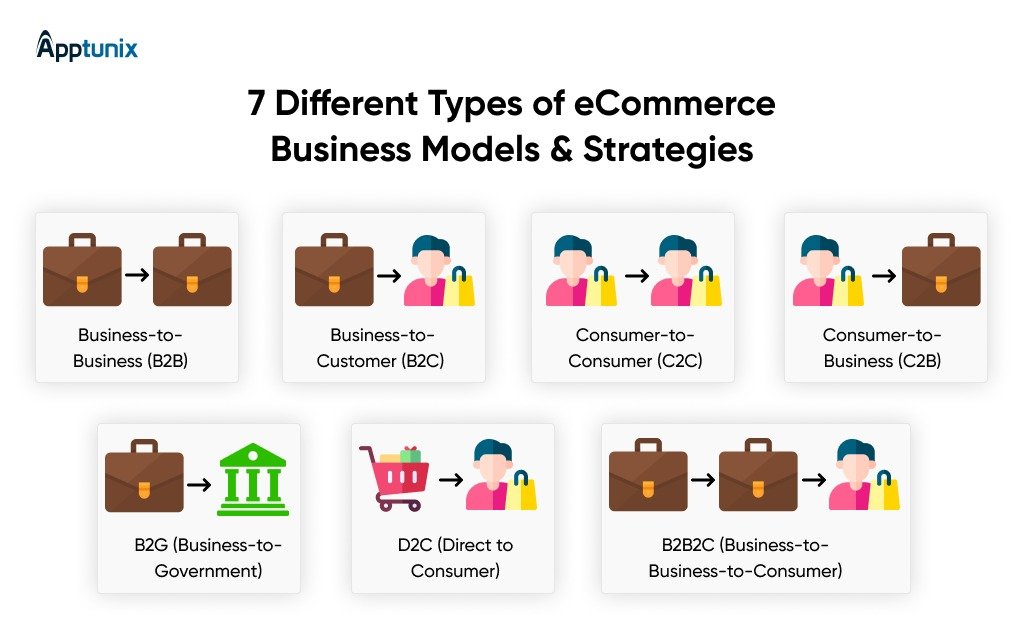
1. Business-to-Consumer (B2C)
Overview: B2C is the most common type of e-commerce and includes online retail transactions where businesses sell directly to individual consumers. The B2C model has exploded with the rise of platforms like Amazon, eBay, and countless online retail sites.
2. Business-to-Business (B2B)
Overview: B2B e-commerce involves transactions between businesses. In this model, companies sell products or services to other businesses, often in bulk, for further production, resale, or operational use.
3. Consumer-to-Consumer (C2C)
Overview: C2C e-commerce allows consumers to buy and sell directly to each other. Online marketplaces that host auctions or individual listings enable C2C transactions, fostering a peer-to-peer (P2P) marketplace.
4. Consumer-to-Business (C2B)
Overview: In the C2B model, individual consumers sell products or services to businesses. This model has become popular in freelance and influencer markets, where individuals offer skills or resources that businesses can purchase.
5. Business-to-Government (B2G)
Overview: B2G (sometimes called B2A for Business-to-Administration) involves transactions between businesses and government entities. This type of e-commerce covers a wide range of sectors, including public utilities, defense, and education, where businesses provide products, services, or information to it.
6. Government-to-Business (G2B)
Overview: G2B refers to government bodies selling goods, services, or information to businesses. This type of e-commerce is typically less common but still relevant in areas like licensing, regulation, and data sharing. G2B also involves government services or resources offered to the business sector, often online.
7. Mobile Commerce (M-Commerce)
Overview: Mobile commerce, or m-commerce, involves e-commerce transactions conducted via mobile devices, including smartphones and tablets. This category overlaps with other types of e-commerce (B2C, C2C, etc.), but focuses specifically on the mobile experience.
What are the 7 major types of e-commerce?
1. Business-to-Consumer (B2C) E-Commerce.
2. Business-to-Business (B2B) E-Commerce.
3. Consumer-to-Consumer (C2C) E-Commerce.
4. Consumer-to-Business (C2B) E-Commerce.
5. Business-to-Administration (B2A) E-Commerce.
6. Consumer-to-Administration (C2A) E-Commerce.
7. Peer-to-Peer (P2P) E-Commerce.
What is B2B B2C C2C C2B ?
The most ecommerce business models common ones include B2B (Business-to-Business), B2C (Business-to-Consumer), C2B (Consumer-to-Business), and C2C (Consumer-to-Consumer). Understanding these models helps businesses and individuals make informed decisions, optimize their sales strategies, and enhance customer satisfaction in the ever-evolving digital marketplace.
What is 3 e- commerce?
It has revolutionised the way we shop and do business. Broadly, e-commerce can be categorised into three main types: Business-to-Consumer (B2C), Business-to-Business (B2B), and Consumer-to-Consumer (C2C). Each of these types has unique characteristics and operates under different business models
Business-to-Consumer (B2C):
B2C e-commerce is the process where businesses sell products or services directly to consumers over the Internet. This is the most common form of e-commerce, including online retailers like Amazon, eBay, and Walmart.
Business-to-Business (B2B):
B2B e-commerce involves transactions between businesses. This type typically involves larger transactions, such as bulk orders of materials or wholesale products.
Consumer-to-Consumer (C2C):
C2C e-commerce is where consumers sell directly to other consumers. This type of e-commerce is facilitated by platforms that provide a marketplace for individuals to buy it.
What are 6 types of e-commerce?
The 6 Types of E-Commerce:
E-commerce isn’t one-size-fits-all. Different types of transactions happen within the online shopping ecosystem, and they are categorized based on who is buying and who is selling. Here’s a breakdown of the six main types of e-commerce with real-world.
Can ChatGPT create an e-commerce website?
In today's digital-first economy, creating an eCommerce website has never been more crucial—or more accessible. With artificial intelligence revolutionizing the way we approach web development, entrepreneurs and businesses can now leverage tools like ChatGPT to build professional, conversion-optimized online stores without extensive technical knowledge.
Step-by-Step Guide to Building Your eCommerce Website:-
Step 1: Choose Your Platform and Domain
While ChatGPT can provide excellent guidance on platform selection, the actual implementation requires professional expertise. Popular eCommerce platforms like Shopify, WooCommerce, and custom solutions each have their advantages:
For businesses seeking comprehensive eCommerce solutions, professional website development services can ensure your platform choice aligns with your long-term growth objectives.
Step 2: Generate Content with AI Assistance
One of ChatGPT's strongest applications in eCommerce development is content creation. Use it to generate: Product Descriptions, Homepage Copy, About Us Pages,For businesses managing large product catalogues, automated content generation tools like Bulk Listing can streamline the process of creating consistent, high-quality product content across multiple marketplaces.
Step 3: Design and User Experience Planning
ChatGPT can help you plan your website's structure and user experience:"Design a user-friendly navigation structure for an eCommerce website with [number] product categories. Focus on conversion optimization and mobile responsiveness."
Step 4: Technical Implementation and Integration
While ChatGPT can generate basic HTML, CSS, and JavaScript snippets, building a fully functional eCommerce website requires more sophisticated technical implementation Professional eCommerce management services can handle these complex integrations while ensuring security, scalability, and performance optimization.Conclusion:
Creating an eCommerce website using ChatGPT in 2025 represents an exciting opportunity to leverage artificial intelligence for business growth. While AI tools like ChatGPT excel at planning, content creation, and strategic thinking, the most successful eCommerce websites combine AI assistance with professional development expertise, comprehensive marketing strategies, and ongoing optimization efforts.
FAQ:
Can ChatGPT build me e-commerce website?
In today's digital-first economy, creating an eCommerce website has never been more crucial—or more accessible. With artificial intelligence revolutionizing the way we approach web development, entrepreneurs and businesses can now leverage tools like ChatGPT to build professional, conversion-optimized online stores without extensive technical knowledge.
Can I use AI to create an e-commerce website?
An AI website builder is a tool that uses artificial intelligence to help you create a website in just a few minutes. Wix’s AI website builder helps you quickly create best-in-class sites through a conversational interface. Once your site has been generated by our AI, you have the flexibility to easily adjust the theme, layout, images, and text until you are satisfied with the result.
Which AI is best for e-commerce?
advertisement tools help you automate campaign setup and optimization while giving you clear performance data so you can spend your ad dollars smarter. Whether you want better ad tracking or smoother cross
What are the 4 types of e-commerce?
E-commerce, also known as Electronic Commerce, refers to the purchase and sale of goods and services through the Internet. The first online transaction occurred in 1994 when a guy sold a Sting CD to a friend via his website Net Market, an American retail platform. B2B, B2C, C2C, C2B.
what AI is best for e-commerce?
- ChatGPT
- Jasper AI
- Copy.ai
Can ChatGPT actually create a website?
The fact of the matter is that ChatGPT isn’t going to spit out a full-blown, entire website for you. But it is going to make all the tasks around it a lot easier, so that all you really have to do is plug and play. With the right ChatGPT prompts, you could reasonably have your site done by the end of the day.
what are the 7 pillars of e-commerce?
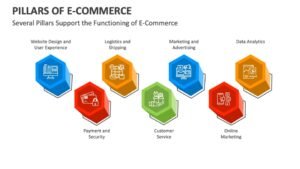
The 7 Pillars of E-Commerce :
E-commerce has become a dominant force in the global economy, reshaping how businesses interact with customers and how consumers purchase goods and services. From small startups to multinational corporations, companies rely on digital platforms to reach wider audiences and operate efficiently. However, building a successful e-commerce business requires more than just launching a website. It depends on a structured foundation commonly referred to as the seven pillars of e-commerce.
1. Product Strategy
The first and most fundamental pillar is the product itself. A well-defined product strategy involves identifying what to sell, understanding market demand, and offering value that distinguishes your brand from competitors. Businesses must carefully select products that solve real customer problems or fulfill specific needs. This includes decisions related to product quality, pricing, branding, and variety.
2. E-Commerce Platform / Website
The e-commerce platform serves as the digital storefront where customers interact with the business. A well-designed website should be visually appealing, easy to navigate, and optimized for both desktop and mobile devices. Speed, security, and functionality are critical factors that influence user trust and engagement.
3. User Experience (UX)
User experience plays a crucial role in determining whether visitors convert into customers. It encompasses every interaction a user has with the website, from browsing products to completing a purchase. A seamless UX includes intuitive navigation, clear product descriptions, high-quality images, and a hassle-free checkout process.
4. Digital Marketing
Digital marketing is essential for driving traffic and building brand awareness. It involves various strategies such as search engine optimization (SEO), social media marketing, content marketing, email campaigns, and paid advertisements. Platforms like Instagram and Facebook enable businesses to connect directly with their target audience and promote products effectively.
5. Payment Systems
A secure and efficient payment system is vital for completing transactions. Customers expect multiple payment options, including credit/debit cards, digital wallets, and region-specific methods such as UPI. The payment process must be quick, reliable, and secure to build trust and reduce cart abandonment.
6. Logistics and Fulfillment
Logistics and fulfillment involve the processes of storing, packing, and delivering products to customers. Efficient supply chain management ensures that orders are delivered accurately and on time.
7. Customer Service and Retention
The final pillar focuses on maintaining strong relationships with customers. Providing excellent customer service helps resolve issues quickly and builds trust. This includes offering responsive support, clear return and refund policies, and personalized communication.
Conclusion:
The success of an e-commerce business depends on the effective integration of these seven pillars. Each pillar supports a different aspect of the operation, and neglecting any one of them can weaken the entire structure. A strong product, supported by a reliable platform, excellent user experience, effective marketing, secure payments, efficient logistics, and outstanding customer service, creates a solid foundation for success.
What are the 7 pillars of e-commerce?
The 7 pillars of e-commerce are the key components that support a successful online business. They work together to ensure smooth operations, customer satisfaction, and long-term growth.
1. Product Strategy
2. Website (or Platform)
3. Traffic (Customer Acquisition)
4. Conversion Optimization
5. Payment Systems
6. Fulfillment & Logistics
7. Customer Service & Retention
What are pillars of e-commerce?
“Pillars of e-commerce” refers to the core building blocks that support a successful online business. While different frameworks exist, most versions revolve around the same essential area.
What are the 7 c’s of e-commerce?
The 7 C’s of e-commerce is a classic framework (often linked to models developed by Rayport and Jaworski) used to design and evaluate effective online experiences. Here’s a clear breakdown.