
What Does a Web Design Company Do?
A web design company is a professional service provider that helps individuals, businesses, and organizations plan, create, and maintain effective websites. They blend creativity with technical expertise to build websites that are not only visually appealing but also highly functional and aligned with the client’s objectives.
The process typically begins with a deep understanding of the client’s brand, target audience, and business goals. This foundation ensures the final website truly reflects the client’s identity and serves its purpose effectively.
What Does a Web Design Company Do? Core Responsibilities:
- Visual Design & Layout:
They design the overall look and feel of the website — choosing appropriate colors, fonts, images, and layouts. The goal is to create a clean, professional, and visually engaging website that makes a strong first impression. When considering what does a web design company do for branding, visual layout is the most immediate factor. When clients ask, ‘what does a web design company do?’ the first answer is always creating a stunning visual identity.
- User Experience (UX):
Beyond aesthetics, they focus on how visitors interact with the site. A good web design company carefully studies user behavior and crafts an intuitive, easy-to-navigate experience. They often create wireframes and prototypes to test and refine the flow before development begins. This results in a website that feels natural and keeps visitors engaged.
- Web Development:
Web design companies handle both the technical and creative aspects. Front-end developers bring the design to life using HTML, CSS, and JavaScript, while back-end developers manage the server, databases, and complex functionality. Many companies offer full-stack development, covering both aspects seamlessly. A major part of what a web design company does involves the technical build, ensuring the site is secure and fast. Beyond the surface, what does a web design company do at the code level? They ensure your site is fast, secure, and responsive.
- Content Management Systems (CMS):
They integrate user-friendly platforms like WordPress, Shopify, or custom CMS solutions. This allows clients to easily update content, add new pages, or manage products without needing technical expertise.
- Search Engine Optimization (SEO):
A professional web design company ensures the website is built with SEO best practices from the start. This includes fast loading speeds, mobile responsiveness, proper structure, and keyword optimization — all aimed at improving visibility on search engines and attracting organic traffic. When asking what does a web design company do for marketing, the answer is built-in SEO that helps you rank on Google. Technical optimization is a core part of what does a web design company do to help your business rank on Google.
- Ongoing Maintenance & Support:
Website launch is just the beginning. Reputable companies offer ongoing maintenance services — including updating content, fixing bugs, enhancing performance, and ensuring security — to keep the website reliable and up-to-date.
- E-commerce Solutions:
For businesses selling online, they build complete e-commerce websites with features like secure payment gateways, product catalogues, shopping carts, and order management systems, delivering a smooth and trustworthy shopping experience. Handling secure payments is a technical part of what does a web design company do for online retailers. From payment gateways to product listings, what does a web design company do for online stores is build a complete sales engine.
- Branding & Graphic Design:
Many web design companies also provide supporting services such as logo design, brand identity development, and social media graphics to ensure a consistent and professional brand presence across all platforms.
- Strategic Digital Partnership:
Beyond building the website, they often act as long-term digital partners. They analyze performance, recommend improvements, and advise on digital marketing strategies to help businesses grow their online presence sustainably.
Conclusion:
A good web design company doesn’t just create a “pretty website” — they build a powerful digital asset that supports your business goals, enhances user satisfaction, and delivers measurable results.
Now that you understand what a web design company does, you can see why hiring professionals is a long-term investment for your brand.

Is a Web Designer an IT Job?
Web design is one of those careers that doesn’t fit neatly into a single box. It sits right in the middle between creativity and technology, which is why people often wonder: Is a web designer really an IT professional?
To truly answer this, we must look at the technical scope of what does a web design company do every day. Web design is a creative-technical hybrid role. To understand if this is an IT role, we first have to look at the daily tasks of what a web design company does to produce a finished site. To bridge the gap between art and tech, we must look at what does a web design company do to balance both worlds.
The Creative Side
A big part of a web designer’s job is making websites look beautiful and feel intuitive. They work with colors, typography, layout, images, and visual storytelling. They think about how people feel when they use a website — just like a graphic designer or artist would. This creative aspect is why many web designers sit in the Marketing or Creative Department rather than the IT team.
The Technical Side
At the same time, web designers aren’t just artists — but in today’s world, you don’t need to be a full-blown coder either. Thanks to powerful no-code and low-code tools, building professional websites has become much more accessible.
Modern web designers typically need to be comfortable with:
- Using visual design tools (many designers work directly inside Webflow, Framer, or WordPress builders)
- Understanding basic responsive design, mobile-friendly layouts, and good user experience
- Knowing how to make websites fast, accessible, and easy to use.
You no longer need to write long lines of HTML, CSS, or JavaScript from scratch for most projects. Drag-and-drop builders, AI-assisted design tools, and smart templates handle a lot of the heavy technical work.
Many designers today focus more on creativity, strategy, and user experience while letting the platform handle the coding. In smaller companies or freelance work, one person can often design and launch a complete website without writing a single line of code.
Having some technical knowledge still gives you an advantage — especially if you want to create highly custom experiences or work with bigger development teams — but it’s no longer a strict requirement to succeed as a web designer.
It Really Depends on the Role
- A pure UI/Visual Designer who only creates mockups → More creative/design role
- A Web Designer + Developer who codes and manages websites → Much closer to IT
- A UX Designer → Focuses more on user research and experience
Because of this range, web design roles are sometimes listed under “Creative,” “Digital,” “Marketing,” or “Technology” — depending on the company.
Education & Career Path
You don’t need a specific degree to become a web designer. Some come from graphic design or fine arts backgrounds, while others come from computer science. A large number are self-taught through online courses, bootcamps, and personal projects.
Final Verdict
Web design is not a traditional IT job like network engineering or system administration. However, it is very much a digital technology role that requires both artistic talent and technical understanding.
In today’s world, this combination is actually a big strength. Employers love web designers because they can think creatively and speak the language of technology.


How Much Is the Salary of a Web Designer?
The salary of a web designer can vary quite a bit depending on several key factors like your experience level, where you live, your specializations, and the type of company you work for. It’s a flexible and dynamic career, which means your earning potential can grow significantly as you build your skills and portfolio. Here’s a realistic and detailed breakdown to help you understand what you can expect. Because of the high value of what does a web design company do, salaries for experienced designers are rising in World.
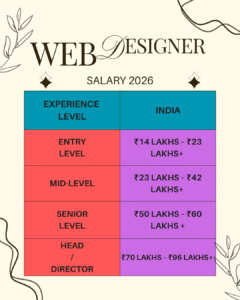
Salaries by Experience Level (INDIA)
India’s salaries are influenced heavily by the local economy and cost of living:
- Entry-level: ₹14 Lakhs – ₹23 Lakhs per year
- Mid-level: ₹23 Lakhs – ₹42 Lakhs per year
- Senior / Specialized: ₹67 Lakhs – ₹76 Lakhs per year
(especially when working with international clients or MNCs)
Designers working remotely for foreign clients often earn significantly more than the local average.
Freelance Earnings
Freelancing can be one of the most lucrative paths in web design, though income tends to be less predictable:
- Hourly rates for experienced freelancers: $50 – $150+ (in Western markets)
- Simple website projects: $500 – $3,000
- Complex custom websites or e-commerce platforms: $5,000 – $25,000+
Building a strong portfolio, a consistent client base, and niche expertise (like UX or Webflow) is the key to earning well as a freelancer.
What Affects Your Salary the Most?
- Specialization: Designers skilled in UX/UI, e-commerce, accessibility, motion design, or front-end coding (React, Vue.js, etc.) earn noticeably more.
- Technical Skills: Those who can both design and code are in high demand and command premium pay.
- Employer Type: Big tech companies, banks, and global brands usually pay the highest. Agencies offer great learning opportunities but sometimes lower base pay. Startups may offer equity instead of high salaries.
- Portfolio & Reputation: A standout portfolio and strong client testimonials often matter more than degrees.
Additional Benefits to Consider
Many full-time positions come with excellent perks beyond the base salary:
- Health insurance and retirement plans
- Remote work allowances
- Annual bonuses and profit sharing
- Learning & development budgets
- Paid time off
When comparing job offers, always look at the total compensation package, not just the base salary.
Future Outlook
The demand for skilled web designers remains strong worldwide. As more businesses invest in their online presence, good designers continue to have excellent earning potential. Staying updated with current tools (, Webflow, Framer, etc.) and trends will help you keep progressing financially.
In short, web design can be a very rewarding career both creatively and financially. With dedication, continuous learning, and a strong portfolio, many designers comfortably reach six-figure incomes — especially when they combine great design skills with technical knowledge or go the freelance route.As AI and new technologies emerge, the definition of what does a web design company do continues to evolve, creating even more high-paying opportunities.
Here’s a table which explains the topic
| Factor | Impact on Salary |
| Location | Big cities & tech hubs pay 30–50% more |
| Skills | UX + Coding (React, Webflow, etc.) = Higher pay |
| Specialization | E-commerce, Accessibility, Motion Design pay premium |
| Employer Type | Big Tech / MNCs > Agencies > Startups |
| Portfolio Strength | Can increase salary by 20–40% |
In short, what affects salary most?
📍 Location
💡 Specialization
📋 Experience
🚀 Productivity
🏢 Industry
🗓️ Freelance vs. full-time
HERE’S A CLEAR COMPARISON TABLE IN USD TO SHOW THE SALARY DIFFERENCE:
What Are the ‘7 Cs’ of Web Design?
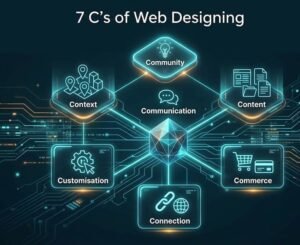
The 7 Cs of web design is a popular and practical framework that helps designers, developers, and business owners build websites that are not only beautiful but also truly effective and user-friendly. It was created with e-commerce and digital marketing in mind, but today it’s used for all kinds of websites. Think of the 7 Cs as a complete checklist that looks at every important part of a website — from how it looks to how it works and connects with people. When you follow this framework, you end up with a site that feels complete, professional, and built to deliver real results.
The 7 Cs framework provides a complete roadmap for understanding what does a web design company do for every project
Here’s a clear and simple explanation of each of the 7 Cs:
Context:
This is all about the overall look, feel, and atmosphere of your website. It includes the colors, fonts, images, layout, and navigation — basically, the entire visual and structural experience. Good context makes sure the website matches your brand identity and appeals directly to your target audience. When the context is right, visitors get a strong first impression and feel encouraged to stay and explore instead of bouncing away.
Content:
Content is everything your visitors actually see and read — text, images, videos, infographics, blog posts, product descriptions, and downloadable files. It has to be high-quality, relevant, useful, and regularly updated. The best content speaks clearly to your audience in a tone and style they understand and enjoy. Strong content builds trust, keeps people engaged, and helps them find exactly what they’re looking for.
Community:
This C is about creating a sense of belonging and interaction on your website. It includes features like comment sections, user reviews, forums, live chat, social media integration, and anything else that lets people connect with each other and with your brand. Community features turn one-time visitors into loyal fans and brand advocates. For many websites — especially e-commerce and social platforms — this is what keeps users coming back again and again. Building an active online community is another example of what does a web design company do to foster brand loyalty.
Customization:
Customization (sometimes called personalization) means making the website feel tailor-made for each visitor. This could be recommended products based on past browsing, saved preferences, personalized dashboards, or content that changes according to a user’s behavior. When done well, customization makes the experience feel relevant and thoughtful, which greatly improves satisfaction and increases the chances that people will buy, sign up, or return.
Communication:
This is how your website talks to its visitors and customers. It covers contact forms, chatbots, email newsletters, push notifications, customer support tools, and any other way you share information. Clear, timely, and helpful communication builds trust and keeps users informed about offers, updates, or support issues. Websites that communicate well usually see higher customer satisfaction and loyalty.
Connection:
Connection refers to how well your website links up with other platforms and services. This includes social media links, partnerships with other sites, API integrations, affiliate programs, and third-party tools. A website that has strong connections feels part of a bigger digital ecosystem instead of standing alone. These links help you reach more people, provide extra value, and make the overall experience smoother for users. When integrating third-party APIs and social feeds, what does a web design company do is ensure your site stays connected to the wider digital world.
Commerce:
Commerce is all about the features that make buying, selling, or any kind of transaction easy and secure. For online stores, this means product catalogues, shopping carts, payment gateways, order tracking, and shipping options. But even non-e-commerce sites use “commerce” elements — like lead forms, subscription sign-ups, or donation buttons. The goal is to create a safe, simple, and enjoyable process that gives customers confidence and encourages them to complete the action. Optimizing the checkout flow is a key part of what does a web design company do to ensure high conversion rates.
One of the best things about the 7 Cs is that they are all connected — they work together rather than in isolation. For example, great content supports better communication, and strong commerce features become even more powerful when combined with customization. By looking at your website through the lens of all seven Cs, you can spot any missing pieces and make balanced improvements.
In real projects, designers and teams often use the 7 Cs as a practical checklist during planning, review, and testing stages. It keeps everyone focused on the big picture instead of just making things look pretty. When a website nails all seven Cs, it doesn’t just look good — it performs well, engages users, and helps the business achieve its goals.
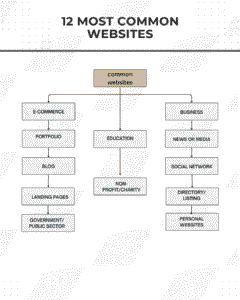
What Are the 12 Most Common Types of Websites?
The internet is full of all kinds of websites, each built for a different purpose and audience. Knowing the most common types helps you understand what your own website might need — whether you’re a business owner, freelancer, or just someone planning a personal site. These categories aren’t always super strict (there’s a lot of overlap), but they give you a clear starting point for deciding on layout, features, and overall feel. Before starting a project, knowing what does a web design company do to customize these 12 site types is essential.
Here’s a straightforward look at the 12 most common types of websites you’ll come across today:
- E-commerce Websites
These are online stores where people buy products or services directly. Think Amazon, Etsy, or any Shopify store. They usually have product pages, shopping carts, secure payment options, and order tracking. The big focus here is making the buying process smooth and trustworthy — because even one small hassle can make someone abandon their cart.
- Business / Corporate Websites
This is the classic “official website” for a company. It tells visitors who you are, what you do, your story, and how to get in touch. These sites are all about building trust and looking professional. They’re not really for selling on the spot, but more for making a solid first impression and supporting sales or marketing efforts.
- Portfolio Websites
Creative professionals — designers, photographers, illustrators, writers — use these to showcase their best work. The design is usually very visual and clean so the projects can shine. A good portfolio site often includes case studies, galleries, and a short bio. It’s one of the most important tools for landing new clients or jobs.
- Blog Websites
Blogs are regularly updated with articles, stories, opinions, or advice. They can be personal, professional, or even used to promote a business. Successful blogs build a loyal audience and can earn money through ads, sponsorships, or affiliate links. The key is consistent, useful content and good SEO.
- News or Media Websites
These are the sites you visit for the latest headlines, articles, videos, and reports (BBC, The Guardian, CNN, etc.). They handle a huge amount of fresh content every day, so they need fast loading speeds, easy navigation, and strong search features so readers can quickly find what they’re looking for.
- Educational / E-learning Websites
These platforms offer courses, tutorials, lessons, and learning materials. Coursera, Khan Academy, and Udemy are perfect examples. They usually include video players, quizzes, progress tracking, and certificates. Accessibility and ease of use are especially important because students come from all backgrounds and skill levels.
- Social Network / Community Websites
Facebook, LinkedIn, Reddit, and similar platforms fall under this category. These sites enable users to create profiles, connect with others, share content, and participate in discussions. They’re technically quite complex and need strong privacy controls and moderation tools, but the design still has to feel friendly and easy to use.
- Non-Profit / Charity Websites
These websites represent causes — environmental, social, humanitarian, etc. The goal is to share the mission, show real impact, attract volunteers, and encourage donations. They tend to use emotional storytelling, clear calls-to-action, and transparent information to build trust with donors.
- Government / Public Sector Websites
These are official sites run by local, state, or national governments. They provide information and services like form submissions, permit applications, tax filing, or appointment booking. They must be highly accessible, secure, and written in simple language so every citizen can use them easily.
- Landing Pages
A landing page is usually a single-page website built for one specific goal — collecting email addresses, promoting a new product, or getting event registrations. They’re very focused, with almost no navigation so visitors stay on track and take the desired action. Marketers test these pages constantly to improve results.
- Directory or Listing Websites
These sites collect and organize information in one place — think Yelp, TripAdvisor, or Yellow Pages. Users can search, filter, and read reviews to make better decisions. The design needs to handle lots of data while staying simple and helpful.
- Personal Websites
These are created by individuals to share their story, interests, hobbies, or professional work. Some are simple digital résumés or business cards, while others are more like mini blogs or creative showcases. They give you full creative freedom and are a great way to build your personal brand online.
As you can see from these 12 categories, the scope of what does a web design company do is incredibly broad and customizable.